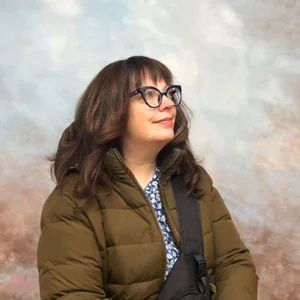
Jerome Trusts the Science
“The tumors are growing, I have to do something,” is what Jerome told himself in the fall of 2025, over two years into his diagnosis of colorectal (“CRC”) cancer in May of 2023.
Jerome’s cancer was discovered after a routine blood donation that showed a low hemoglobin count, which led to the colonoscopy that confirmed he had cancer. There was no significant history of the disease in his family, aside from a grandfather who died of cancer that, in hindsight but without clear evidence, might have been CRC.
After surgery in June 2023, Jerome received twelve rounds of chemotherapy from his oncologist that ended in December of the same year. Just a few months later, in May of 2024, a CT scan confirmed that there were tumors in his abdominal cavity, which were found to be cancerous as well. “Treatable, but not curable,” was what Jerome was told of his now stage IV CRC.
Jerome’s wife, Patty, immediately got to work looking for advice and guidance for treatment of stage IV CRC. She found an active clinical trial for CRC in Maryland at the National Institutes of Health (“NIH”). Jerome was accepted. “NIH is an incredible place,” says Jerome, “You feel like you are on the cutting edge of science.”
Dutifully, and with great hope, Jerome and Patty made the trip to the NIH from their suburban Chicago home regularly for the treatments and aftercare. From the beginning of his treatment at the NIH through October of 2025, everything seemed to be working well enough. There was no shrinkage, but there was no growth -- good enough for Jerome, Patty, and the doctors.
Until the growth was detected in October 2025 and Jerome was told to start looking for different trials he might qualify for, with his type of cancer. By December, just two months later, the abdominal tumor had grown 20% larger.
Jerome and Patty were back at it, looking for hope and a different clinical trial for which he would qualify. MD Anderson in Texas, Memorial Sloan Kettering in New York City, Mayo Clinic in Minnesota, and the University of Chicago, closest to home, were researched and pursued. Jerome was accepted at the University of Chicago for a phase 1 clinical trial when Hope & Healing Cancer Services caught their eye through an online search. “When I saw the name ‘Hope & Healing,’ well, the name . . .,” says Jerome, “I vetted the trials, and everything is legitimate.”
In their first meeting with Dr. Srilata Gundala, founder of Hope & Healing Cancer Services, it was clear they were in the right place. “She found a phase IV clinical trial with less side effects and FDA approval,” says Jerome, “Why settle for a phase I trial with the uncertainty that comes with that and a lot of unknown side effects?”
Jerome is currently on his second cycle of treatment in the phase IV trial through Hope & Healing Cancer Services. “It’s been great,” says Jerome, “I had a lot of bloating that was not painful, but uncomfortable. That’s gone now. During the daytime I feel great with more energy. I’m still working and Patty notices I have more color, and my appetite has improved.”
Jerome has confidence in choosing to move forward with Hope & Healing Cancer Services for the access to clinical trials that are available there. “At University of Chicago, the phase I was all they had. The larger hospitals only know their own trials. Dr. Gundala has access and knows about many different trials and helped find the right one for us. She was hopeful and could find solutions. Her attitude was more confident. The larger places I went to were more cautious.”
Jerome is looking ahead to his future now, with the help of Dr. Gundala. “She knows everything on the horizon,” he says enthusiasm, “There is a different phase III clinical trial that opens up in March or April, that she believes I am a candidate for.” Jerome explains that that drug has shown promise for not just stopping the growth of his tumor, but for potentially shrinking it.
Dr. Gundala is intentional with how she helps her patients seeking a clinical trial and being in an independent clinic provides greater flexibility for her patients, “We are a community-based oncology practice and see all tumor types. As Principal Investigator at HHCS, I have trials across all tumor types and that gives an edge for patients looking at drug benefits and safety. Academic oncologists are highly specialized in one specific tumor type and on clinical trials available only at their institutions. Here at Hope & Healing, we have a broader view and since we are always speaking with our colleagues at the academic institutions, we are looking for trials available at different centers.”
That approach is helping Jerome.
“I have the luxury to be positive now because I feel good,” says Jerome, “but I will do anything to keep feeling good and get treatments that give me the best outcome. As long as I can sit and hold Patty’s hand, I will fight. The scientists and researchers who do clinical trials work hard and have a mission. They live and breathe medicine. Don’t let a smaller clinic stop you.”
Written By: Sheila Quirke, MSW
Reviewed By: Srilata Gundala, MD